Best Foods That Help You Sleep Better at Night
☰ Table of Contents
- 1. Understanding foods and eating habits for sleep
- 2. Foods and eating habits for sleep: Evidence and Practical Meaning
- 3. Factors That Change the Answer
- 4. How to Apply This Information
- 5. How to Monitor Progress
- 6. Common Mistakes and Important Limits
- 7. When to Seek Qualified Help
- 8. Sources and Further Reading
- Large heavy meals close to bed can worsen discomfort or reflux in some people.
- Caffeine can remain active for hours, and alcohol can fragment later sleep.
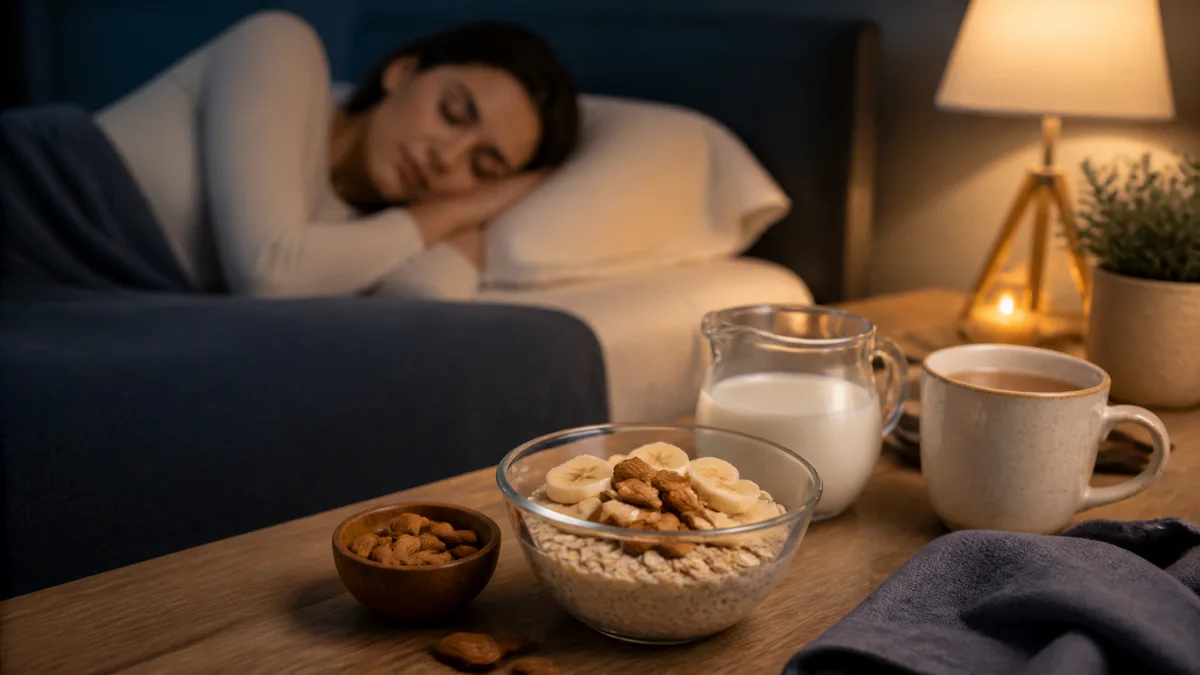
- A small balanced snack may help when genuine hunger prevents sleep.
- Keep meals regular and note foods or timing linked to symptoms.
- Do not rely on a “sleep food” while ignoring chronic insomnia or sleep apnoea symptoms.
Understanding foods and eating habits for sleep
No single food reliably causes sleep, but meal timing, caffeine, alcohol, hunger, reflux, and the overall diet can affect sleep quality.
In this article, foods and eating habits for sleep is used within a wider definition: sleep is regulated by circadian timing and accumulating sleep pressure, so both schedule and time awake influence the ability to sleep.
Large heavy meals close to bed can worsen discomfort or reflux in some people.
Foods and eating habits for sleep: Evidence and Practical Meaning
The main influence on the answer
Caffeine can remain active for hours, and alcohol can fragment later sleep. This detail changes how foods and eating habits for sleep should be interpreted and why one person’s experience cannot automatically predict another person’s outcome.
The limit behind the headline
A small balanced snack may help when genuine hunger prevents sleep. Keep that qualification beside the main claim; leaving it out would make the article sound more certain than the available information allows.
What the facts support
Taken together, these points support a measured approach: keep meals regular and note foods or timing linked to symptoms. They do not support ignoring the warning to do not rely on a “sleep food” while ignoring chronic insomnia or sleep apnoea symptoms.
Factors That Change the Answer
Personal interpretation of foods and eating habits for sleep should account for this context: sleep quality reflects duration, timing, regularity, environment, stress, substances, pain, medication, breathing, and circadian rhythm.
The individual factors for foods and eating habits for sleep also include the following: light exposure, work shifts, travel, stress, pain, exercise, naps, alcohol, caffeine, medicines, breathing disorders, and the sleep environment can change the pattern.
Before applying the guidance, identify which of these circumstances are present and whether they alter the starting assumption that large heavy meals close to bed can worsen discomfort or reflux in some people.
How to Apply This Information
1. Establish a reliable starting point
Keep meals regular and note foods or timing linked to symptoms. This step is designed to address the first key finding: large heavy meals close to bed can worsen discomfort or reflux in some people.
2. Make the next step workable
Move caffeine earlier and reduce evening alcohol. Change the schedule gradually and reserve the bed for sleep when insomnia has made wakefulness in bed a habit.
3. Review before changing the plan again
Choose a light snack with carbohydrate and protein if bedtime hunger is recurring. Use the review to test whether a small balanced snack may help when genuine hunger prevents sleep. If the picture is still unclear, improve consistency or allow a more suitable observation period rather than changing several variables at once.
How to Monitor Progress
Progress on foods and eating habits for sleep should be assessed in this way: keep a simple sleep diary of bedtimes, wake times, estimated sleep, naps, substances, and daytime sleepiness for one or two weeks.
For foods and eating habits for sleep, the review should show whether keep meals regular and note foods or timing linked to symptoms helped without creating the problem described in this caution: do not rely on a “sleep food” while ignoring chronic insomnia or sleep apnoea symptoms.
If progress is unclear, revisit the evidence that caffeine can remain active for hours, and alcohol can fragment later sleep. Then check measurement consistency, changing circumstances, and whether the plan was actually repeatable before making it more restrictive or difficult.
Common Mistakes and Important Limits
Do not overstate what the result proves
Do not rely on a “sleep food” while ignoring chronic insomnia or sleep apnoea symptoms. That limit follows directly from the fact that large heavy meals close to bed can worsen discomfort or reflux in some people.
Avoid a shortcut that creates a new problem
Avoid restrictive diets or large supplement doses marketed as sedatives. A safer approach remains consistent with the practical recommendation to move caffeine earlier and reduce evening alcohol.
One further limit applies specifically when using this foods and eating habits for sleep guidance: “Natural” products can cause side effects or interactions, while alcohol may shorten sleep onset but disrupt sleep later in the night.
When to Seek Qualified Help
Individual advice about foods and eating habits for sleep is especially important in these situations: speak with a clinician about chronic insomnia, loud snoring, witnessed breathing pauses, severe daytime sleepiness, unusual night-time behaviour, or symptoms that make driving unsafe.
A separate safety boundary also applies to foods and eating habits for sleep: discuss chronic insomnia, loud snoring, witnessed breathing pauses, severe daytime sleepiness, unusual night behaviour, or restless legs with a clinician.
When asking for individual advice about foods and eating habits for sleep, bring the relevant measurements, dates, symptoms, medicines, and a record of the attempt to choose a light snack with carbohydrate and protein if bedtime hunger is recurring.
Sources and Further Reading
Ready to get a starting estimate? Try our free Sleep Calculator — instant and no sign-up needed.
Try Free Calculator →Important FAQs About foods and eating habits for sleep


Sleep Quality Knowledge Quiz
Test your knowledge of sleep cycles, sleep hygiene, and evidence-based strategies for better rest.
Take Quiz →Burnout Knowledge Quiz
How much do you know about burnout — its causes, stages, symptoms, and evidence-based recovery strat...
Take Quiz →