How to Build Muscle: A Complete Science-Based Guide
☰ Table of Contents
- 1. How Muscle Growth Happens
- 2. Choose Exercises That Cover the Body
- 3. Sets, Repetitions, and Effort
- 4. Progressive Overload Without Ego Lifting
- 5. Protein, Calories, and Meal Quality
- 6. Recovery and Growth
- 7. Simple Full-Body Beginner Template
- 8. How to Apply This how to build muscle Guide
- 9. Sources and Further Reading
- Muscle growth requires repeated resistance training and recovery
- Train major muscle groups consistently and progress load, repetitions, sets, or technique
- Eat enough protein and total energy to support the goal
- Good exercise form and manageable volume matter more than novelty
- Track performance over months, not day-to-day soreness or pump
How Muscle Growth Happens
Resistance exercise creates a stimulus that, with adequate recovery and nutrition, can increase muscle protein over time. One workout does not build visible muscle; the result comes from repeated training cycles.
Genetics, training age, sleep, nutrition, age, and health affect the rate. Beginners often progress faster than experienced lifters, but everyone benefits from realistic expectations.
Choose Exercises That Cover the Body
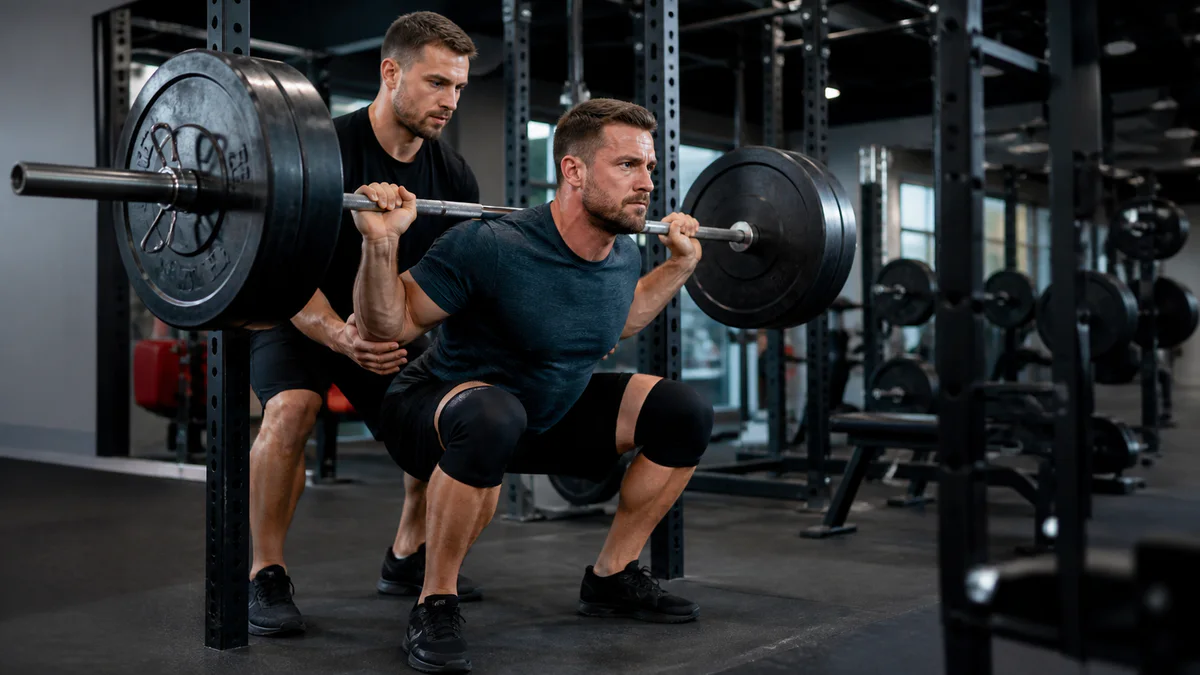
A balanced program includes knee-dominant work such as squats or leg press, hip-dominant work such as hinges, horizontal and vertical pushes, rows or pulldowns, and optional isolation or carry exercises.
Machines, free weights, bands, and body-weight movements can all work. Choose variations that fit your joints, equipment, and skill and that can be progressed safely.
Sets, Repetitions, and Effort
Muscle can grow across a range of repetitions when sets are challenging and technique remains controlled. Beginners can start with two or three sets per exercise, leave a few good repetitions in reserve, and train each major muscle group about twice weekly.
More volume is not always better. Add work only when performance and recovery are stable.
Progressive Overload Without Ego Lifting
Progressive overload means gradually increasing the training demand. Add a repetition, a small amount of load, an extra set, improved range of motion, or better control when the current work is performed consistently.
Keep a training log. If load rises while range and technique shrink, the target muscle may not be receiving a better stimulus.
Protein, Calories, and Meal Quality
Protein provides amino acids used in muscle remodelling. Active people often benefit from an intake above the basic adult RDA, distributed across meals. Total energy also matters: a small surplus can support gain, while muscle can still be built in some beginners during maintenance or fat loss.
Base most meals on minimally processed foods, include carbohydrates to support training, and avoid assuming supplements can replace adequate food.
Recovery and Growth
Training is the stimulus; adaptation occurs between sessions. Allow muscles time to recover, sleep enough for normal function, and use easier weeks when fatigue accumulates.
Persistent joint pain, falling performance, irritability, and disrupted sleep can signal that volume or intensity exceeds recovery. Soreness is neither required nor a reliable measure of growth.
Simple Full-Body Beginner Template
| Day A | Day B |
|---|---|
| Squat or leg press | Hip hinge or hip thrust |
| Chest press | Overhead or incline press |
| Row | Pulldown or assisted pull-up |
| Hamstring or calf work | Split squat or step-up |
| Core or carry | Core or carry |
Alternate the sessions two or three times weekly with at least a day between. Learn technique and progress gradually.
How to Apply This how to build muscle Guide
When applying how to build muscle, personal context matters: training frequency and intensity depend on current fitness, age, injury history, health conditions, available equipment, schedule, sleep, nutrition, and recovery. A plan copied from an advanced athlete may supply more fatigue than useful stimulus for a beginner.
A workable how to build muscle plan should follow this principle: build a repeatable week before adding complexity. Use controlled technique, a manageable starting dose, gradual progression, and easier sessions or rest between demanding workouts; consistency over months matters more than exhaustion in one session.
For how to build muscle, choose one primary outcome and use the same method long enough to see a meaningful pattern. Record the exercise, duration, sets or distance, effort, and any symptoms. Improvement may appear as better technique, more repetitions, greater load, a faster comfortable pace, lower effort at the same work, or better daily function—not only calorie burn or body weight.
The aim is not to follow every possible tip. It is to use the article’s main evidence—starting with “Muscle growth requires repeated resistance training and recovery”—to make one realistic decision, observe the result, and adjust without losing sight of health, function, and sustainability.
Sources and Further Reading
- ACSM: progression models in resistance training
- ISSN position stand: protein and exercise
- HHS: muscle-strengthening guidance
Ready to get a starting estimate? Try our free Heart Rate Zone Calculator — instant and no sign-up needed.
Try Free Calculator →