Mediterranean Diet: Complete Beginner Guide With Meal Ideas
☰ Table of Contents
- 1. What the Mediterranean Diet Is
- 2. Core Foods and Practical Frequency
- 3. Use a Simple Mediterranean Plate
- 4. Seven Easy Meal Ideas
- 5. A Beginner Shopping List
- 6. Heart Health, Weight, and Expectations
- 7. Alcohol Is Not Required
- 8. How to Apply This Mediterranean diet guide Guide
- 9. Sources and Further Reading
- Mediterranean eating is a flexible pattern, not one rigid menu
- It emphasises vegetables, fruit, legumes, whole grains, nuts, seeds, olive oil, and fish
- Fish and poultry are generally chosen more often than red or processed meat
- Wine is optional and should not be started for health reasons
- Small food substitutions make the pattern easier to sustain
What the Mediterranean Diet Is
The Mediterranean diet describes shared features of traditional eating patterns in countries around the Mediterranean Sea. There is no single official menu; foods differ by region, culture, religion, and budget.
The common structure is mostly minimally processed plant foods, olive oil as a main fat, and moderate amounts of fish, dairy, eggs, and poultry. Red and processed meat, sweets, and highly refined foods are less frequent.
Core Foods and Practical Frequency
| Emphasise often | Include according to preference | Limit more often |
|---|---|---|
| Vegetables, fruit, beans, lentils | Fish and seafood | Processed meat |
| Whole grains, nuts, seeds | Yogurt, cheese, eggs, poultry | Sugary drinks and sweets |
| Olive oil, herbs, spices | Potatoes and other staples | Refined grains and highly processed snacks |
Portion size still matters when weight change is a goal.
Use a Simple Mediterranean Plate
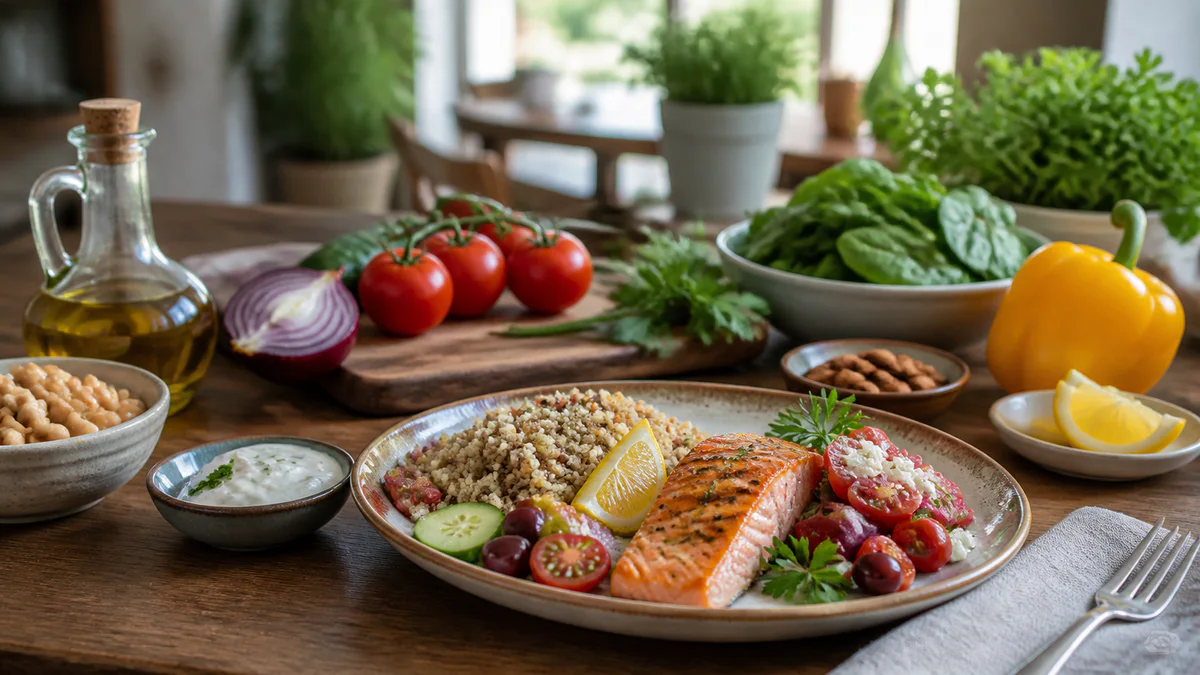
Fill roughly half the plate with vegetables, one quarter with a protein food such as beans, fish, eggs, or poultry, and one quarter with whole grain or another starchy food. Add olive oil, nuts, seeds, or avocado in an amount suited to energy needs.
Fruit, yogurt, or a small portion of cheese can complete the meal. This is a flexible visual tool, not a rule that every traditional dish must follow.
Seven Easy Meal Ideas
- Oats with yogurt, berries, and walnuts.
- Whole-grain toast with tomato, egg, and fruit.
- Lentil soup with salad and whole-grain bread.
- Chickpea, cucumber, tomato, herb, and olive-oil bowl.
- Grilled fish with potatoes and roasted vegetables.
- Bean and vegetable pasta with a side salad.
- Chicken or tofu skewers with bulgur and yogurt sauce.
A Beginner Shopping List
Start with vegetables you will actually cook, two fruits, canned or dried beans, a whole grain, eggs or yogurt, fish or another protein, olive oil, unsalted nuts, and herbs or spices. Frozen produce and canned beans are convenient and nutritious; rinse canned foods when sodium is a concern.
Build from familiar meals. You do not need imported specialty products for a Mediterranean-style pattern.
Heart Health, Weight, and Expectations
The American Heart Association recommends a Mediterranean-style pattern because it aligns with vegetables, fruit, whole grains, legumes, nuts, fish, and unsaturated oils while limiting added sugar, sodium, refined carbohydrate, saturated fat, and processed meat.
Weight loss is not automatic: olive oil and nuts are nutritious but energy-dense. Adjust portions to the goal without removing the foods that make the pattern satisfying.
Alcohol Is Not Required
Some traditional descriptions include wine, but alcohol is optional. People who do not drink should not begin for a supposed health benefit. Alcohol adds calories and raises health and safety risks, and some people should avoid it completely.
Use water, sparkling water, coffee, or tea according to preference and tolerance.
How to Apply This Mediterranean diet guide Guide
When applying Mediterranean diet guide, personal context matters: energy and nutrient needs vary with age, body size, activity, pregnancy, medication, health conditions, allergies, food access, and dietary pattern. Symptoms attributed to one food may also have several possible causes.
A workable Mediterranean diet guide plan should follow this principle: make changes at the meal and weekly-pattern level: add nutrient-dense foods, protect adequate protein and fibre, use mostly unsaturated fats, plan realistic portions, and retain foods that make the pattern culturally and practically sustainable.
For Mediterranean diet guide, choose one primary outcome and use the same method long enough to see a meaningful pattern. Assess energy, hunger, digestion, food variety, relevant laboratory markers, symptom patterns, and the ability to continue the plan. Change one major variable at a time when trying to understand a response.
The aim is not to follow every possible tip. It is to use the article’s main evidence—starting with “Mediterranean eating is a flexible pattern, not one rigid menu”—to make one realistic decision, observe the result, and adjust without losing sight of health, function, and sustainability.
Sources and Further Reading
- American Heart Association: Mediterranean-style diet
- Dietary Guidelines for Americans
- PREDIMED trial republication: cardiovascular outcomes
Ready to get a starting estimate? Try our free Macro Calculator — instant and no sign-up needed.
Try Free Calculator →