Calorie Calculator Guide: How to Find Your Exact Calorie Needs

☰ Table of Contents
- 1. What a Calorie Calculator Actually Estimates
- 2. The Inputs That Change Your Result
- 3. BMR, RMR, and TDEE
- 4. Choosing the Right Activity Level
- 5. Turning the Estimate Into a Goal
- 6. How to Calibrate Your Number
- 7. Common Accuracy Problems
- 8. How to Apply This calorie calculator guide Guide
- 9. Sources and Further Reading
- A calculator estimates a starting calorie range; it cannot measure your metabolism directly
- Results combine a resting-energy equation with an activity estimate
- Choosing an inflated activity level is a common source of error
- Use two to four weeks of intake and weight trends to calibrate the estimate
- Health conditions, pregnancy, growth, and eating-disorder history need individual guidance
What a Calorie Calculator Actually Estimates
A calorie calculator estimates how much energy you may use in a day. Most begin with basal or resting energy expenditure and then apply an activity factor. The final number is often called total daily energy expenditure (TDEE) or maintenance calories.
It is a model, not a metabolic test. Equations are built from group data, while an individual’s needs can vary because of body composition, movement, health, environment, and measurement error.
The Inputs That Change Your Result
Age, sex used by the equation, height, and weight affect the resting estimate. Activity level then accounts—roughly—for exercise and daily movement. Some calculators use body-fat percentage, but an inaccurate body-fat input can make that result less reliable.
Enter current measurements and select the activity description that matches an ordinary week. Do not count a future workout plan or choose “very active” solely because exercise feels difficult.
BMR, RMR, and TDEE
BMR is energy required for basic functions under strict laboratory conditions. Resting metabolic rate (RMR) is measured under less restrictive conditions and is usually slightly higher. Online tools generally predict rather than measure either value.
TDEE adds energy used for movement, exercise, and digestion. This is the number usually used to plan maintenance, loss, or gain. Read our BMR vs TDEE guide for a fuller comparison.
Choosing the Right Activity Level
Activity labels are broad. Consider your job, transport, household tasks, step count, training frequency, and recovery—not exercise sessions alone.
| Pattern | Practical description |
|---|---|
| Sedentary | Mostly seated day, little planned exercise |
| Lightly active | Some routine walking or 1–3 easier sessions weekly |
| Moderately active | Regular movement and roughly 3–5 training sessions weekly |
| Very active | Physically demanding days or frequent hard training |
If unsure, start with the lower reasonable option and calibrate from observed results.
Turning the Estimate Into a Goal
For maintenance, begin near the estimated TDEE. For weight loss, use a modest reduction that still supports adequate nutrition and daily function. For gain, use a modest addition and monitor the rate of change.
A target is best treated as a range. Weekly averages are often more practical than demanding the same intake every day. Food quality, protein, fibre, micronutrients, and enjoyment still matter inside the calorie target.
How to Calibrate Your Number
Track intake as consistently as practical and compare average morning weights over two to four weeks. If the trend is stable, average intake is probably close to maintenance for that period. If weight is moving, the direction provides feedback, but water and digestive changes can obscure short windows.
Adjust gradually rather than reacting to one weigh-in. Recalculate after meaningful weight change, a major shift in activity, pregnancy, illness, or a prolonged plateau.
Common Accuracy Problems
- Activity overestimation: planned exercise does not always offset a mostly seated day.
- Food logging gaps: oils, drinks, portions, and restaurant meals are easy to miss.
- Double counting: adding exercise calories to a target that already includes exercise.
- Short observation windows: sodium, carbohydrate, menstrual cycle, and bowel contents affect scale weight.
- False precision: an estimate such as 2,347 kcal is not exact to the calorie.
How to Apply This calorie calculator guide Guide
When applying calorie calculator guide, personal context matters: energy needs vary with body size, lean mass, age, occupation, steps, training, sleep, environment, health, medication, and life stage. The same intake can therefore produce different outcomes between people or at different points in one person’s life.
A workable calorie calculator guide plan should follow this principle: start with a reasonable range, keep meals nutritionally adequate, and compare it with several weeks of consistent real-world data. Make small adjustments only after a trend is visible; large corrections based on a few days often react to water change rather than tissue change.
For calorie calculator guide, choose one primary outcome and use the same method long enough to see a meaningful pattern. Track weekly average weight and, when relevant, waist, hunger, energy, training performance, sleep, and adherence. A plan that changes the scale but produces marked fatigue, poor nutrition, or repeated rebound eating is not working well.
The aim is not to follow every possible tip. It is to use the article’s main evidence—starting with “A calculator estimates a starting calorie range; it cannot measure your metabolism directly”—to make one realistic decision, observe the result, and adjust without losing sight of health, function, and sustainability.
Sources and Further Reading
- National Academies: Dietary Reference Intakes for Energy
- NIDDK: Body Weight Planner
- NIDDK: eating, activity, and weight management
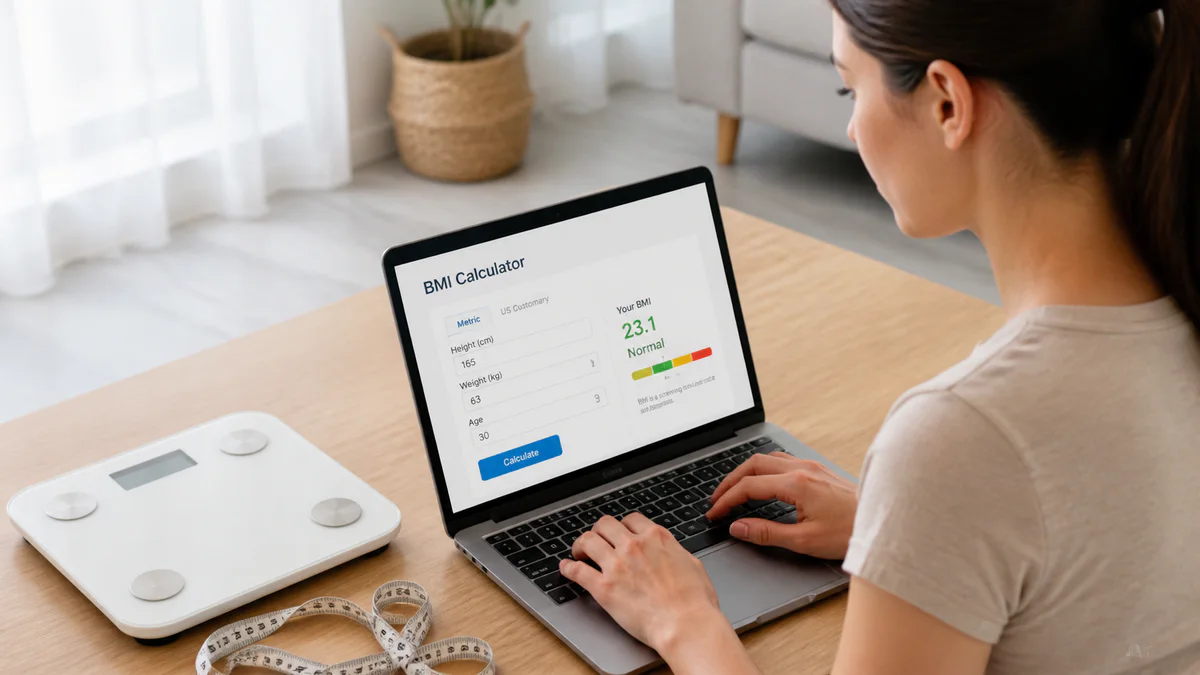
Ready to get a starting estimate? Try our free BMI Calculator — instant and no sign-up needed.
Try Free Calculator →