Heart Age Calculator: Is Your Heart Older Than You Are?

☰ Table of Contents
- Results depend on the risk equation, population, age range, and inputs such as blood pressure, cholesterol, smoking, and diabetes.
- Missing or estimated inputs can change the answer substantially.
- The useful outcome is identifying modifiable risk factors, not feeling reassured or alarmed by the age label.
- Enter measured rather than guessed blood pressure and laboratory values when possible.
- Do not use heart age to diagnose blocked arteries or predict an individual event.
Understanding heart-age calculators
A heart-age calculator translates cardiovascular risk factors into an age comparison to make risk easier to discuss, but it is not a measurement of how old the heart physically is.
In this article, heart-age calculators is used within a wider definition: the arithmetic may be correct while the interpretation remains limited because the tool cannot examine symptoms, confirm measurement quality, or include every relevant clinical factor.
Results depend on the risk equation, population, age range, and inputs such as blood pressure, cholesterol, smoking, and diabetes.
Heart-age calculators: Evidence and Practical Meaning
The main influence on the answer
Missing or estimated inputs can change the answer substantially. This detail changes how heart-age calculators should be interpreted and why one person’s experience cannot automatically predict another person’s outcome.
The limit behind the headline
The useful outcome is identifying modifiable risk factors, not feeling reassured or alarmed by the age label. Keep that qualification beside the main claim; leaving it out would make the article sound more certain than the available information allows.
What the facts support
Taken together, these points support a measured approach: enter measured rather than guessed blood pressure and laboratory values when possible. They do not support ignoring the warning to do not use heart age to diagnose blocked arteries or predict an individual event.
Factors That Change the Answer
Personal interpretation of heart-age calculators should account for this context: a calculator or reference range is an educational estimate. Measurement method, timing, medicines, health history, and the population used to create the range can change interpretation.
The individual factors for heart-age calculators also include the following: age, sex used by the equation, pregnancy, medication, fitness, body composition, timing, device accuracy, and health history may change the answer or whether the tool applies at all.
Before applying the guidance, identify which of these circumstances are present and whether they alter the starting assumption that results depend on the risk equation, population, age range, and inputs such as blood pressure, cholesterol, smoking, and diabetes.
How to Apply This Information
1. Establish a reliable starting point
Enter measured rather than guessed blood pressure and laboratory values when possible. This step is designed to address the first key finding: results depend on the risk equation, population, age range, and inputs such as blood pressure, cholesterol, smoking, and diabetes.
2. Make the next step workable
Review which factors drive the result. Use the output to frame a question, compare a consistent trend, or prepare for a professional conversation—not to start, stop, or change treatment independently.
3. Review before changing the plan again
Discuss validated cardiovascular-risk assessment and prevention options with a clinician. Use the review to test whether the useful outcome is identifying modifiable risk factors, not feeling reassured or alarmed by the age label. If the picture is still unclear, improve consistency or allow a more suitable observation period rather than changing several variables at once.
How to Monitor Progress
Progress on heart-age calculators should be assessed in this way: recalculate only when an input or goal meaningfully changes.
For heart-age calculators, the review should show whether enter measured rather than guessed blood pressure and laboratory values when possible helped without creating the problem described in this caution: do not use heart age to diagnose blocked arteries or predict an individual event.
If progress is unclear, revisit the evidence that missing or estimated inputs can change the answer substantially. Then check measurement consistency, changing circumstances, and whether the plan was actually repeatable before making it more restrictive or difficult.
Common Mistakes and Important Limits
Do not overstate what the result proves
Do not use heart age to diagnose blocked arteries or predict an individual event. That limit follows directly from the fact that results depend on the risk equation, population, age range, and inputs such as blood pressure, cholesterol, smoking, and diabetes.
Avoid a shortcut that creates a new problem
Do not start, stop, or change blood-pressure or cholesterol medicine from the result. A safer approach remains consistent with the practical recommendation to review which factors drive the result.
One further limit applies specifically when using this heart-age calculators guidance: online tools cannot rule out disease, explain abnormal symptoms, or replace validated testing, physical examination, and clinical judgement where those are needed.
When to Seek Qualified Help
Individual advice about heart-age calculators is especially important in these situations: use a qualified clinician for diagnosis, treatment decisions, abnormal readings, concerning symptoms, or results that conflict with how you feel.
A separate safety boundary also applies to heart-age calculators: seek medical care for concerning symptoms even when a calculator result appears reassuring.
When asking for individual advice about heart-age calculators, bring the relevant measurements, dates, symptoms, medicines, and a record of the attempt to discuss validated cardiovascular-risk assessment and prevention options with a clinician.
Sources and Further Reading
- American Heart Association: Blood pressure categories
- US Preventive Services Task Force: Recommendations
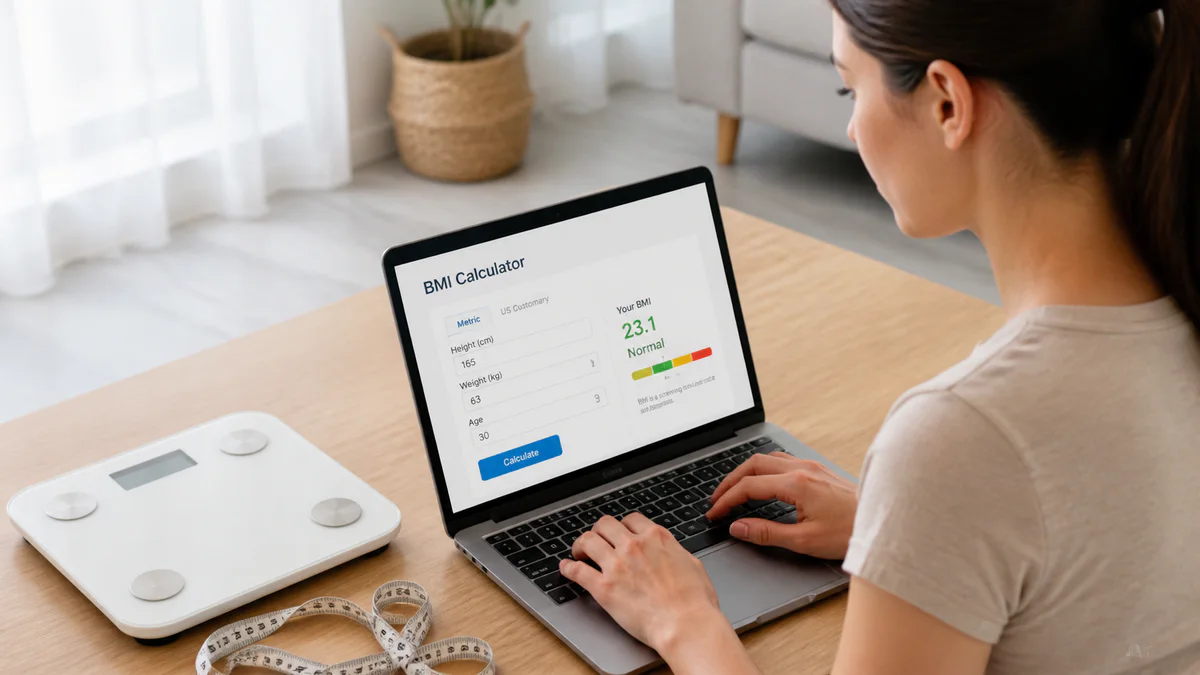
Ready to get a starting estimate? Try our free BMI Calculator — instant and no sign-up needed.
Try Free Calculator →