High Protein Foods: The Ultimate List with Protein Content
☰ Table of Contents
- Compare protein per realistic serving, not only per 100 grams
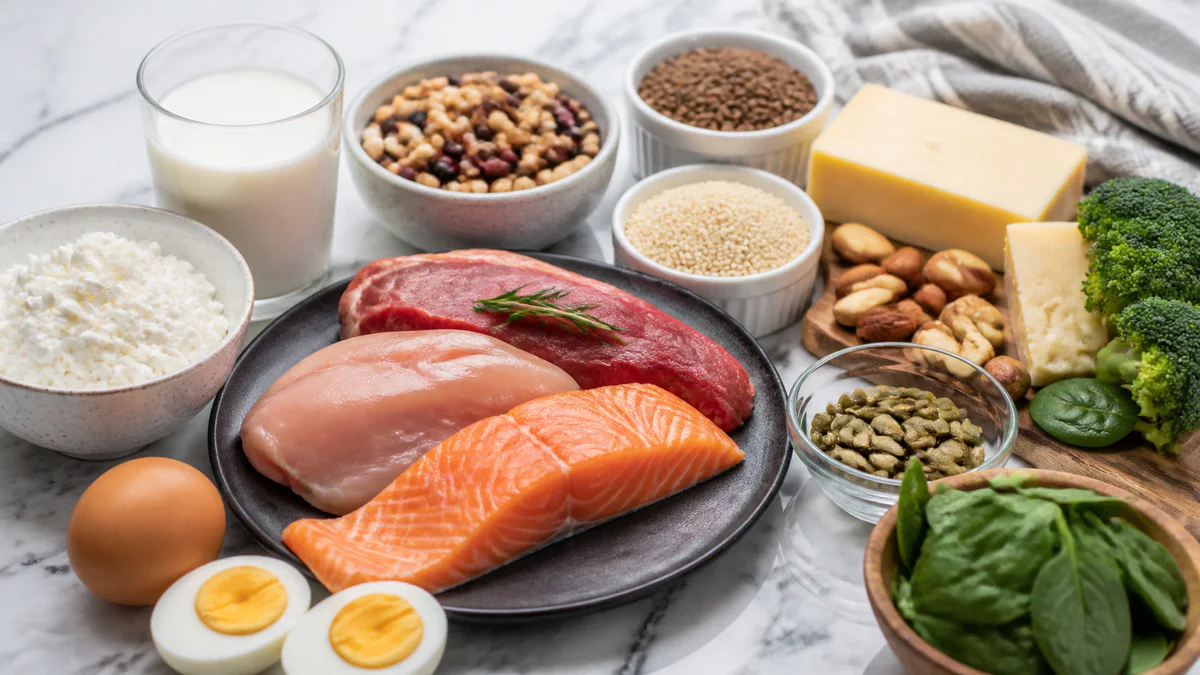
- Fish, poultry, eggs, dairy, soy, beans, lentils, and seitan are useful options
- Protein quality matters, but variety across the day can meet amino-acid needs
- Check sodium, saturated fat, added sugar, fibre, and total calories as well as protein
- Build meals from foods first; supplements are optional conveniences
How to Read a High-Protein Foods List
Serving size changes every comparison. Dry lentils, cooked lentils, and lentil soup have different water content; a protein bar can range from a snack to a small meal. Use the Nutrition Facts label and compare the amount you actually eat.
Protein is only one feature. Consider fibre, fats, sodium, added sugar, micronutrients, price, and how the food fits the meal.
Animal Protein Foods
| Food | Typical serving | Approximate protein |
|---|---|---|
| Cooked chicken or turkey breast | 100 g | About 29–31 g |
| Canned tuna, drained | 100 g | About 23–26 g |
| Salmon, cooked | 100 g | About 22–25 g |
| Greek-style yogurt | 170–200 g | About 15–20 g |
| Cottage cheese | 1 cup | About 24–28 g |
| Eggs | 2 large | About 12–13 g |
Values vary by brand and preparation. Choose lean or lower-sodium versions when those features matter to your diet.
Plant Protein Foods
| Food | Typical serving | Approximate protein |
|---|---|---|
| Tempeh | 100 g | About 18–20 g |
| Firm tofu | 100 g | About 12–17 g |
| Seitan | 100 g | About 20–25 g |
| Lentils, cooked | 1 cup | About 18 g |
| Chickpeas, cooked | 1 cup | About 14–15 g |
| Edamame, cooked | 1 cup | About 17–19 g |
Beans and lentils also contribute fibre and carbohydrate. Combining plant foods over the day provides a broad amino-acid pattern.
Quick Protein Options
Useful low-preparation choices include yogurt, cottage cheese, eggs, canned fish, milk or fortified soy beverage, tofu, roasted edamame, lentil pouches, and leftovers from a batch-cooked meal.
Protein powders can be convenient when food is impractical, but they are not required. Choose a reputable product, check serving size and additives, and remember that supplements do not replace a varied diet.
Build a High-Protein Meal
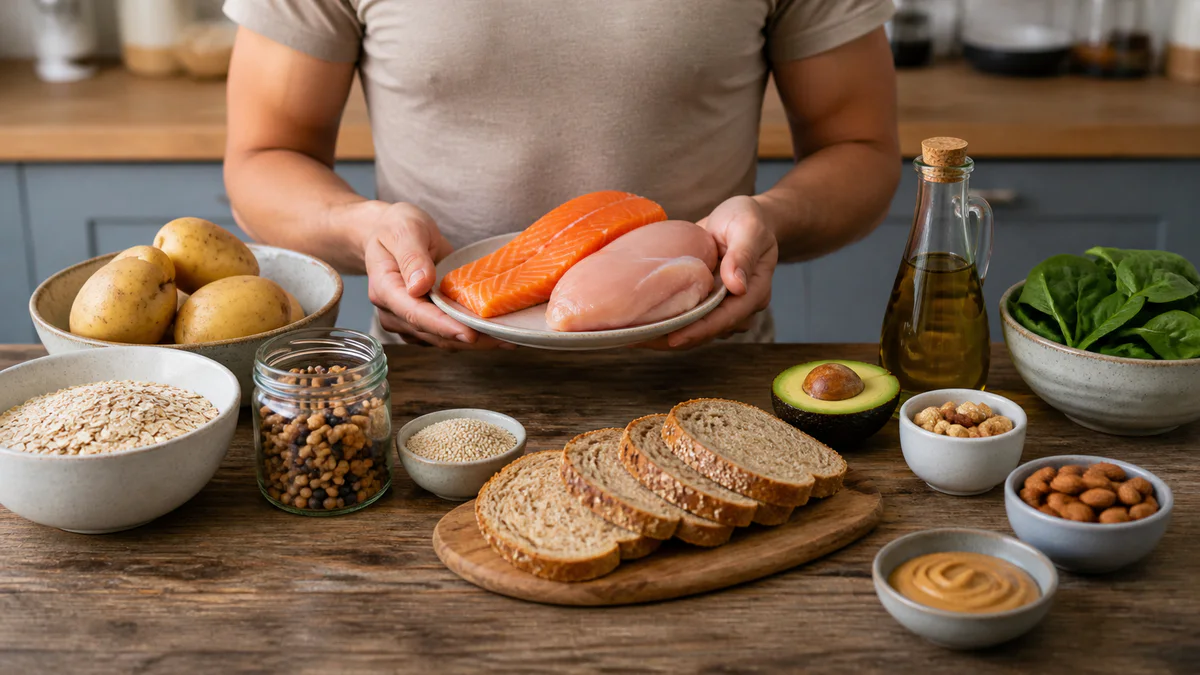
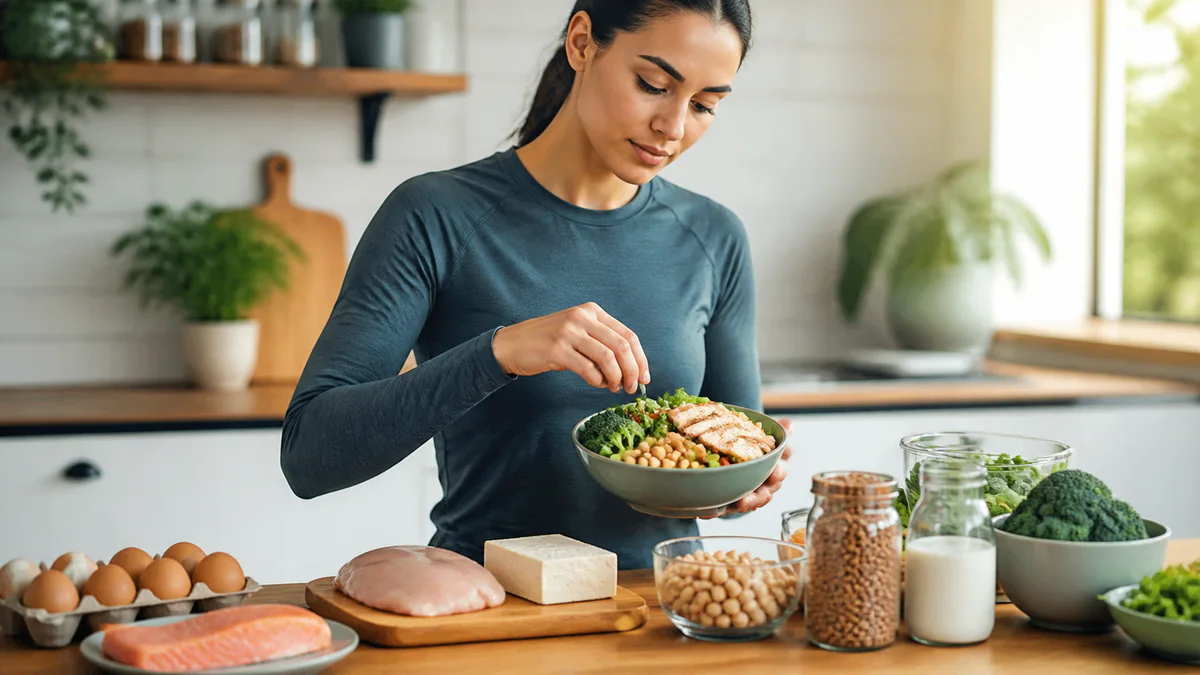
Choose one main protein, add vegetables or fruit, include a fibre-rich carbohydrate as needed, and use fats in portions suited to your energy goal. Examples include lentil curry with vegetables and rice; salmon with potatoes and salad; tofu stir-fry with noodles; or yogurt with fruit, oats, and seeds.
A meal can use two moderate sources—such as beans plus whole grains—instead of one very large portion.
Protein Foods for Different Goals
For weight management, favour filling sources that fit the calorie target: lean meats, fish, low-fat dairy, tofu, and legumes. For muscle gain, increase total meal size and include carbohydrate around training. For plant-based diets, make protein sources intentional at each main meal.
The “best” choice depends on allergies, culture, budget, ethics, digestive tolerance, and medical needs.
Label and Food-Safety Checks
- Compare protein using the same serving size.
- Check sodium in deli meats, canned products, and meat substitutes.
- Review saturated fat in fatty cuts and some processed foods.
- Refrigerate cooked foods promptly and cook meat, fish, and eggs safely.
- Choose pasteurised dairy where foodborne illness risk is a concern.
How to Apply This high protein foods Guide
When applying high protein foods, personal context matters: two foods with similar macros can differ substantially in fibre, sodium, micronutrients, processing, portion size, and how filling they are. Labels and tracking apps also use rounded values, so macro totals should be treated as workable estimates.
A workable high protein foods plan should follow this principle: build meals around a varied mix of protein sources, high-fibre carbohydrate foods, vegetables or fruit, and mostly unsaturated fat sources. Adjust portions and timing for appetite, training, glucose management, digestive tolerance, and the main goal.
For high protein foods, choose one primary outcome and use the same method long enough to see a meaningful pattern. Evaluate hunger, energy, digestion, training performance, food variety, relevant laboratory results, and adherence—not only whether the app reached three exact numbers. A plan should remain nutritionally adequate on busy and imperfect days.
The aim is not to follow every possible tip. It is to use the article’s main evidence—starting with “Compare protein per realistic serving, not only per 100 grams”—to make one realistic decision, observe the result, and adjust without losing sight of health, function, and sustainability.
Sources and Further Reading
- USDA FoodData Central: nutrient values
- National Academies: protein Dietary Reference Intakes
- Dietary Guidelines for Americans
Protein figures are rounded examples; packaging and USDA data for the exact food are more precise.
Ready to get a starting estimate? Try our free Macro Calculator — instant and no sign-up needed.
Try Free Calculator →Important FAQs About high protein foods
Nutrition Knowledge Quiz
How well do you understand macros, vitamins, and healthy eating? Test your nutrition IQ with 10 evid...
Take Quiz →Nutrient & Vitamin Deficiency Quiz
Can you identify which deficiency causes which health problem? Test your knowledge of vitamins, mine...
Take Quiz →