How Much Protein Do You Really Need Per Day?

☰ Table of Contents
- 1. Start With Grams per Kilogram
- 2. Baseline and Active Protein Ranges
- 3. Protein for Muscle Gain
- 4. Protein During Weight Loss
- 5. How to Spread Protein Across Meals
- 6. How to Apply This how much protein per day Guide
- 7. Plant and Animal Protein Sources
- 8. When to Personalize the Target
- 9. Sources and Further Reading
- The adult protein RDA is 0.8 g per kg per day, a population baseline rather than a fitness target
- Active adults often use roughly 1.2–2.0 g/kg depending on training and goal
- Daily total matters most; spreading protein across meals is practical
- Both animal and well-planned plant foods can meet protein needs
- Kidney disease, pregnancy, older age, and medical conditions need individual context
Start With Grams per Kilogram
Protein needs scale more usefully with body weight than with a single grams-per-day rule. Convert pounds to kilograms by dividing by 2.205, then multiply by the target grams per kilogram.
Example: 75 kg × 1.4 g/kg = 105 g protein per day. Treat the result as a workable range rather than an exact daily requirement.
Baseline and Active Protein Ranges
| Context | Common planning range |
|---|---|
| Adult RDA baseline | 0.8 g/kg/day |
| Generally active adult | About 1.2–1.6 g/kg/day |
| Intensive resistance or endurance training | About 1.4–2.0 g/kg/day |
| Calorie deficit with resistance training | Often toward the upper end of an active range |
These are planning ranges, not universal prescriptions. Needs can differ with training, energy intake, age, injury, and health.
Protein for Muscle Gain
Resistance training provides the muscle-building signal; protein supplies amino acids for repair and growth. More protein cannot compensate for an ineffective program, and intake far beyond useful ranges does not force unlimited growth.
Distribute protein-containing meals across the day and include a meal within a convenient few hours before or after training. The total daily pattern is more important than a narrow “anabolic window.”
Protein During Weight Loss
Higher protein within an appropriate calorie target can support fullness and help preserve lean tissue, especially when combined with resistance training. It does not cancel excess calories or make every high-protein product nutritious.
Keep vegetables, fruit, fibre-rich carbohydrates, and healthy fats in the plan rather than allowing protein to crowd out the rest of the diet.
How to Spread Protein Across Meals
Divide the daily target across three to five eating occasions. Someone targeting 120 g could use roughly 25–35 g at main meals plus a protein-containing snack. Exact equality is unnecessary.
Regular distribution can be particularly helpful for older adults or people who currently eat nearly all their protein at dinner.
How to Apply This how much protein per day Guide
When applying how much protein per day, personal context matters: two foods with similar macros can differ substantially in fibre, sodium, micronutrients, processing, portion size, and how filling they are. Labels and tracking apps also use rounded values, so macro totals should be treated as workable estimates.
A workable how much protein per day plan should follow this principle: build meals around a varied mix of protein sources, high-fibre carbohydrate foods, vegetables or fruit, and mostly unsaturated fat sources. Adjust portions and timing for appetite, training, glucose management, digestive tolerance, and the main goal.
For how much protein per day, choose one primary outcome and use the same method long enough to see a meaningful pattern. Evaluate hunger, energy, digestion, training performance, food variety, relevant laboratory results, and adherence—not only whether the app reached three exact numbers. A plan should remain nutritionally adequate on busy and imperfect days.
The aim is not to follow every possible tip. It is to use the article’s main evidence—starting with “The adult protein RDA is 0.8 g per kg per day, a population baseline rather than a fitness target”—to make one realistic decision, observe the result, and adjust without losing sight of health, function, and sustainability.
Plant and Animal Protein Sources
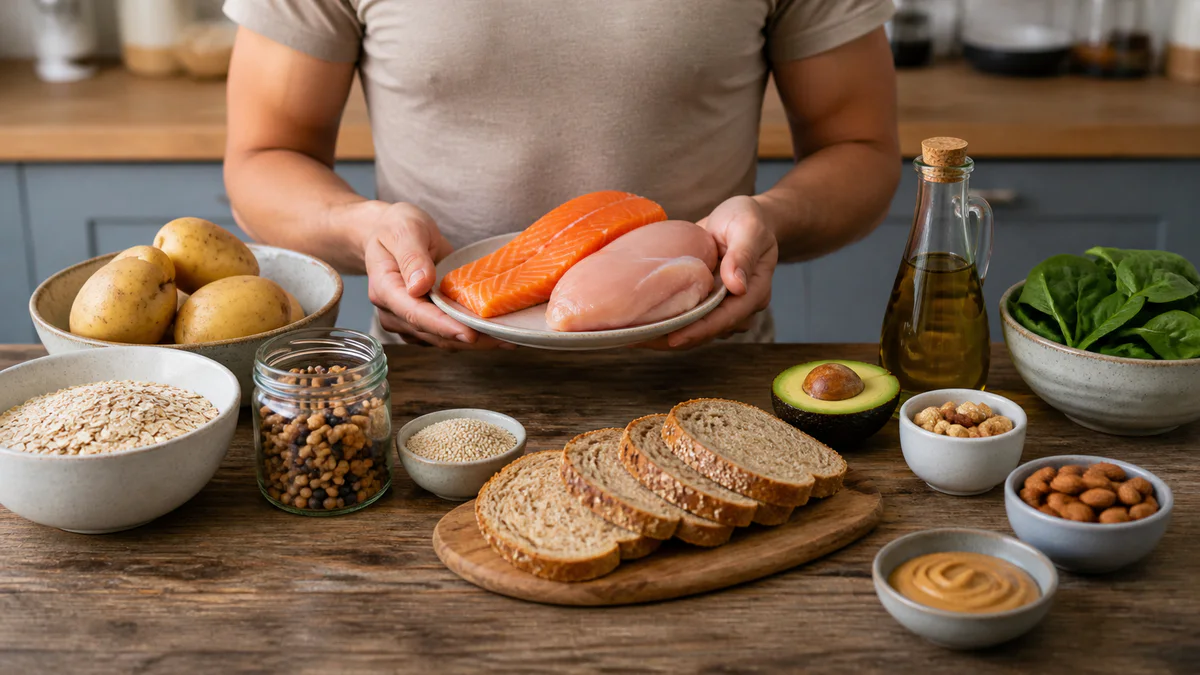
Fish, poultry, eggs, dairy, lean meat, soy foods, beans, lentils, peas, nuts, seeds, and some grains contribute protein. Animal proteins and soy generally contain all essential amino acids in useful proportions; varied plant foods can also meet needs across the day.
Choose sources with the whole diet in mind, including saturated fat, sodium, fibre, cost, culture, and environmental preferences.
When to Personalize the Target
Older adults, competitive athletes, pregnant or breastfeeding people, and those recovering from illness or injury may have different needs. Kidney disease can require tailored protein and electrolyte planning; do not use a general high-protein target without clinical advice.
Persistent digestive symptoms, unintended weight change, or difficulty meeting needs are good reasons to consult a registered dietitian.
Sources and Further Reading
- National Academies: protein Dietary Reference Intakes
- ISSN position stand: protein and exercise
- Dietary Guidelines for Americans
Ready to get a starting estimate? Try our free Macro Calculator — instant and no sign-up needed.
Try Free Calculator →Important FAQs About how much protein per day

Nutrition Knowledge Quiz
How well do you understand macros, vitamins, and healthy eating? Test your nutrition IQ with 10 evid...
Take Quiz →Nutrient & Vitamin Deficiency Quiz
Can you identify which deficiency causes which health problem? Test your knowledge of vitamins, mine...
Take Quiz →