How to Measure Body Fat at Home: 5 Most Accurate Methods
☰ Table of Contents
- 1. Understanding how to measure body fat at home
- 2. How to measure body fat at home: Evidence and Practical Meaning
- 3. Factors That Change the Answer
- 4. How to Apply This Information
- 5. How to Monitor Progress
- 6. Common Mistakes and Important Limits
- 7. When to Seek Qualified Help
- 8. Sources and Further Reading
- Bioelectrical-impedance scales are affected by hydration, food, exercise, skin temperature, and device equations.
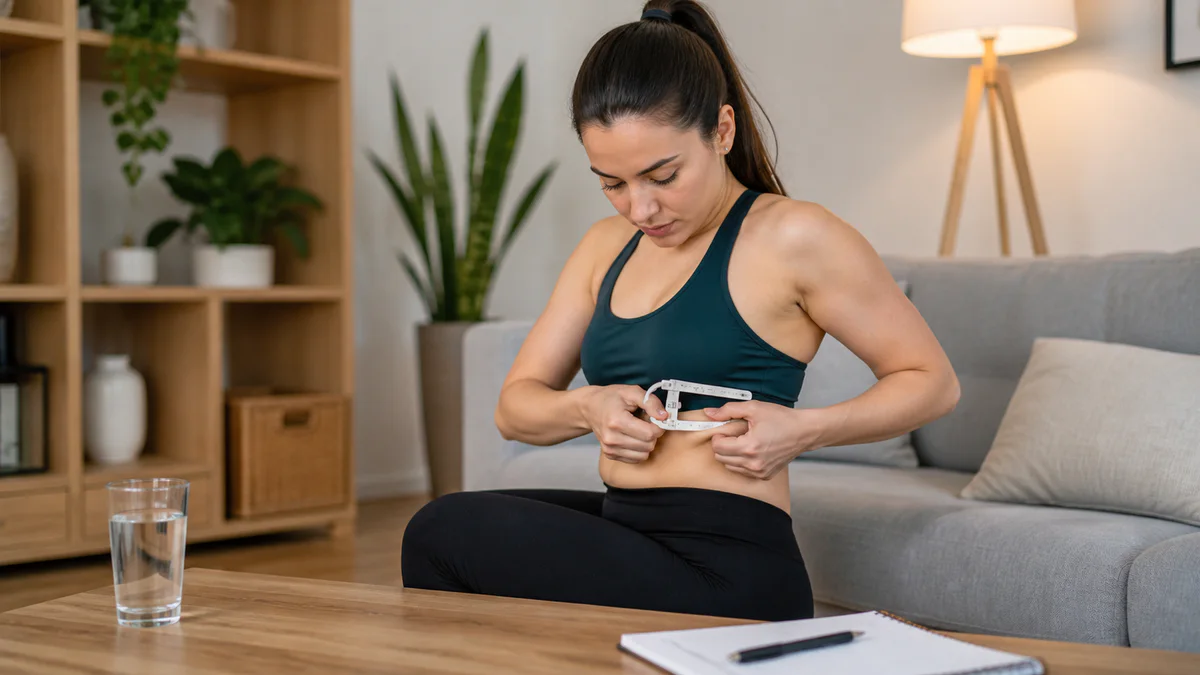
- Skinfold callipers depend on site selection, technique, and the prediction equation used.
- Waist measurement does not provide body-fat percentage but can track abdominal size with less equipment.
- Select one method and learn its instructions.
- Do not compare values from different devices as if they share the same scale.
Understanding how to measure body fat at home
Home body-fat methods estimate rather than directly measure fat mass, and repeatability is often more useful than the displayed precision.
In this article, how to measure body fat at home is used within a wider definition: every practical method is an estimate: skinfolds, bioelectrical-impedance scales, circumference equations, air displacement, and imaging use different assumptions and can produce different results.
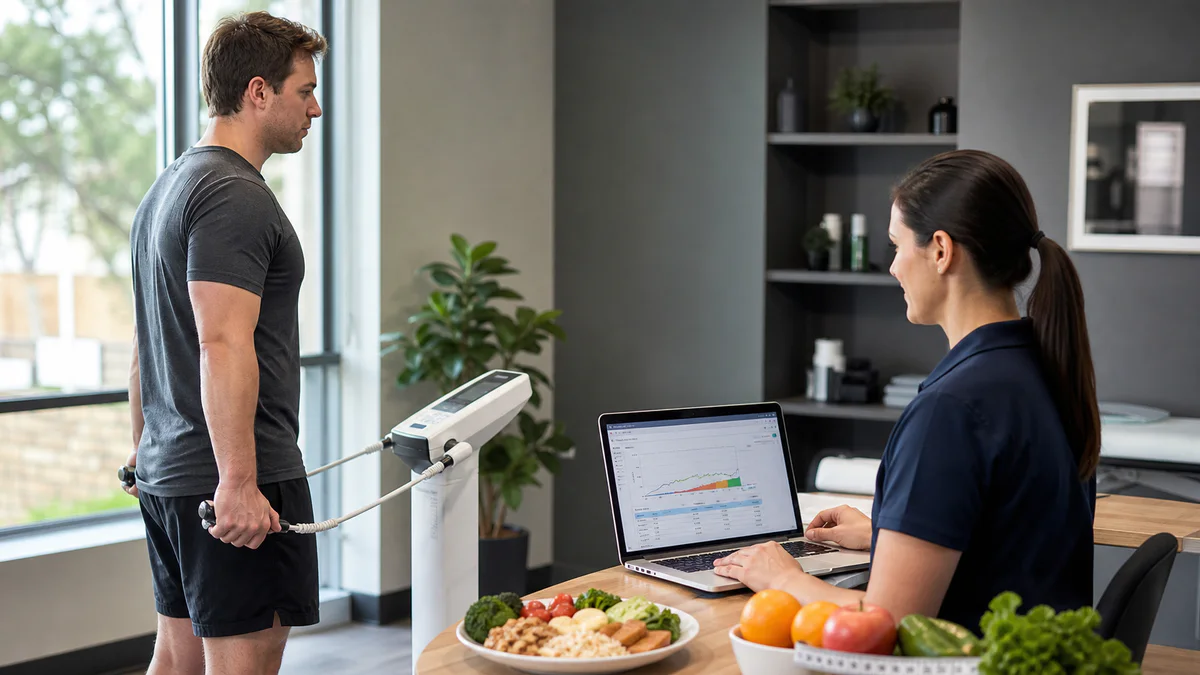
Bioelectrical-impedance scales are affected by hydration, food, exercise, skin temperature, and device equations.
How to measure body fat at home: Evidence and Practical Meaning
The main influence on the answer
Skinfold callipers depend on site selection, technique, and the prediction equation used. This detail changes how how to measure body fat at home should be interpreted and why one person’s experience cannot automatically predict another person’s outcome.
The limit behind the headline
Waist measurement does not provide body-fat percentage but can track abdominal size with less equipment. Keep that qualification beside the main claim; leaving it out would make the article sound more certain than the available information allows.
What the facts support
Taken together, these points support a measured approach: select one method and learn its instructions. They do not support ignoring the warning to do not compare values from different devices as if they share the same scale.
Factors That Change the Answer
Personal interpretation of how to measure body fat at home should account for this context: body-composition estimates change with the method, hydration, recent food and exercise, age, sex, and the equation used by the device.
The individual factors for how to measure body fat at home also include the following: body-fat goals should account for age, sex, training demands, menstrual or hormonal function, medical history, and the reason for measuring.
Before applying the guidance, identify which of these circumstances are present and whether they alter the starting assumption that bioelectrical-impedance scales are affected by hydration, food, exercise, skin temperature, and device equations.
How to Apply This Information
1. Establish a reliable starting point
Select one method and learn its instructions. This step is designed to address the first key finding: bioelectrical-impedance scales are affected by hydration, food, exercise, skin temperature, and device equations.
2. Make the next step workable
Measure at a similar time under similar hydration, meal, and exercise conditions. That approach is more protective of lean tissue and performance than rapid restriction or large volumes of compensatory exercise.
3. Review before changing the plan again
Record several readings and compare longer trends with waist and performance. Use the review to test whether waist measurement does not provide body-fat percentage but can track abdominal size with less equipment. If the picture is still unclear, improve consistency or allow a more suitable observation period rather than changing several variables at once.
How to Monitor Progress
Progress on how to measure body fat at home should be assessed in this way: use several indicators over a realistic time frame: waist measurements, strength, clothing fit, average body weight, and one consistent composition method.
For how to measure body fat at home, the review should show whether select one method and learn its instructions helped without creating the problem described in this caution: do not compare values from different devices as if they share the same scale.
If progress is unclear, revisit the evidence that skinfold callipers depend on site selection, technique, and the prediction equation used. Then check measurement consistency, changing circumstances, and whether the plan was actually repeatable before making it more restrictive or difficult.
Common Mistakes and Important Limits
Do not overstate what the result proves
Do not compare values from different devices as if they share the same scale. That limit follows directly from the fact that bioelectrical-impedance scales are affected by hydration, food, exercise, skin temperature, and device equations.
Avoid a shortcut that creates a new problem
Do not use a home estimate to diagnose a disease or justify extreme restriction. A safer approach remains consistent with the practical recommendation to measure at a similar time under similar hydration, meal, and exercise conditions.
One further limit applies specifically when using this how to measure body fat at home guidance: comparisons are also misleading when one reading comes from a home scale and another comes from a different equation, scanner, or testing protocol.
When to Seek Qualified Help
Individual advice about how to measure body fat at home is especially important in these situations: get individual advice when weight or composition changes unexpectedly, when restrictive eating is developing, or when a medical condition affects safe nutrition or exercise.
A separate safety boundary also applies to how to measure body fat at home: stop and seek qualified advice if the pursuit of a body-fat target causes dizziness, recurrent injury, missed periods, loss of libido, persistent fatigue, compulsive checking, bingeing, purging, or severe food restriction.
When asking for individual advice about how to measure body fat at home, bring the relevant measurements, dates, symptoms, medicines, and a record of the attempt to record several readings and compare longer trends with waist and performance.
Sources and Further Reading
Ready to get a starting estimate? Try our free Body Fat Calculator — instant and no sign-up needed.
Try Free Calculator →Important FAQs About how to measure body fat at home
Body Composition Knowledge Quiz
Test your understanding of body fat, lean mass, BMI, and the science of body composition assessment.
Take Quiz →Biological Ageing Knowledge Quiz
How much do you know about biological ageing, longevity science, and the habits that extend a health...
Take Quiz →