Swimming for Fitness: Calories Burned and Full-Body Benefits
☰ Table of Contents
- 1. Understanding swimming calories and fitness benefits
- 2. Swimming calories and fitness benefits: Evidence and Practical Meaning
- 3. Factors That Change the Answer
- 4. How to Apply This Information
- 5. How to Monitor Progress
- 6. Common Mistakes and Important Limits
- 7. When to Seek Qualified Help
- 8. Sources and Further Reading
- Efficient swimmers may cover more distance with less energy at the same apparent speed.
- Water reduces weight-bearing impact but does not eliminate shoulder, neck, or breathing-related issues.
- Pool watches and online tables estimate calories and may handle stroke changes poorly.
- Begin with short lengths and generous rest while developing breathing and technique.
- Do not swim alone when inexperienced or when a medical condition increases risk.
Understanding swimming calories and fitness benefits
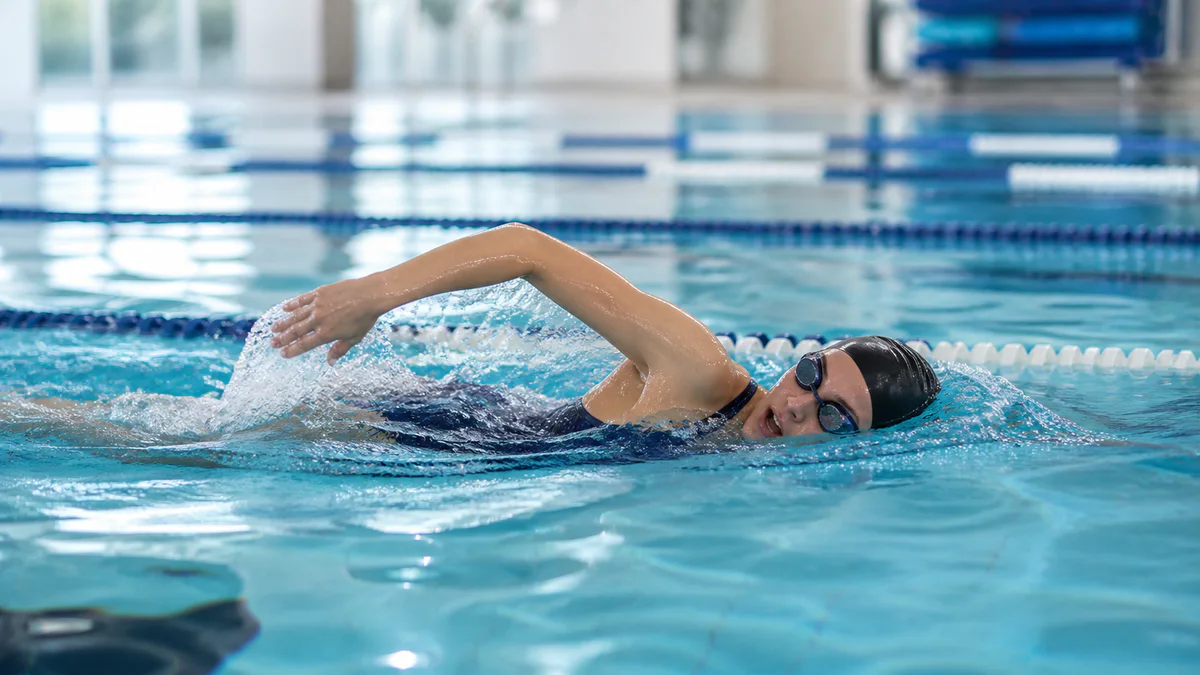
Swimming trains aerobic fitness and muscular endurance with low joint impact, while calorie use varies with stroke, skill, pace, water temperature, body size, and rest.
In this article, swimming calories and fitness benefits is used within a wider definition: swimming can train aerobic fitness and muscular endurance while water reduces weight-bearing load.
Efficient swimmers may cover more distance with less energy at the same apparent speed.
Swimming calories and fitness benefits: Evidence and Practical Meaning
The main influence on the answer
Water reduces weight-bearing impact but does not eliminate shoulder, neck, or breathing-related issues. This detail changes how swimming calories and fitness benefits should be interpreted and why one person’s experience cannot automatically predict another person’s outcome.
The limit behind the headline
Pool watches and online tables estimate calories and may handle stroke changes poorly. Keep that qualification beside the main claim; leaving it out would make the article sound more certain than the available information allows.
What the facts support
Taken together, these points support a measured approach: begin with short lengths and generous rest while developing breathing and technique. They do not support ignoring the warning to do not swim alone when inexperienced or when a medical condition increases risk.
Factors That Change the Answer
Personal interpretation of swimming calories and fitness benefits should account for this context: training response depends on current fitness, technique, total weekly load, recovery, health, pain, equipment, and how quickly volume or intensity is increased.
The individual factors for swimming calories and fitness benefits also include the following: swimming ability, confidence in deep water, shoulder or neck symptoms, breathing conditions, seizure risk, pregnancy, disability, and access to supervision all affect the safest session design.
Before applying the guidance, identify which of these circumstances are present and whether they alter the starting assumption that efficient swimmers may cover more distance with less energy at the same apparent speed.
How to Apply This Information
1. Establish a reliable starting point
Begin with short lengths and generous rest while developing breathing and technique. This step is designed to address the first key finding: efficient swimmers may cover more distance with less energy at the same apparent speed.
2. Make the next step workable
Increase total swim time before adding frequent hard intervals. Begin in a supervised setting with short lengths and generous recovery.
3. Review before changing the plan again
Use supervised facilities and follow water-safety rules appropriate to skill. Use the review to test whether pool watches and online tables estimate calories and may handle stroke changes poorly. If the picture is still unclear, improve consistency or allow a more suitable observation period rather than changing several variables at once.
How to Monitor Progress
Progress on swimming calories and fitness benefits should be assessed in this way: progress may appear as covering the same distance with better control or needing less recovery.
For swimming calories and fitness benefits, the review should show whether begin with short lengths and generous rest while developing breathing and technique helped without creating the problem described in this caution: do not swim alone when inexperienced or when a medical condition increases risk.
If progress is unclear, revisit the evidence that water reduces weight-bearing impact but does not eliminate shoulder, neck, or breathing-related issues. Then check measurement consistency, changing circumstances, and whether the plan was actually repeatable before making it more restrictive or difficult.
Common Mistakes and Important Limits
Do not overstate what the result proves
Do not swim alone when inexperienced or when a medical condition increases risk. That limit follows directly from the fact that efficient swimmers may cover more distance with less energy at the same apparent speed.
Avoid a shortcut that creates a new problem
Do not treat a calorie estimate as exact or ignore shoulder pain and breathlessness. A safer approach remains consistent with the practical recommendation to increase total swim time before adding frequent hard intervals.
One further limit applies specifically when using this swimming calories and fitness benefits guidance: low impact does not mean risk free.
When to Seek Qualified Help
Individual advice about swimming calories and fitness benefits is especially important in these situations: seek qualified help for chest symptoms, fainting, severe breathlessness, new neurological symptoms, persistent pain, or a condition that changes exercise safety.
A separate safety boundary also applies to swimming calories and fitness benefits: stop for chest pressure, faintness, severe breathlessness, or sudden loss of coordination, and follow local water-safety rules.
When asking for individual advice about swimming calories and fitness benefits, bring the relevant measurements, dates, symptoms, medicines, and a record of the attempt to use supervised facilities and follow water-safety rules appropriate to skill.
Sources and Further Reading
Ready to get a starting estimate? Try our free Heart Rate Zone Calculator — instant and no sign-up needed.
Try Free Calculator →